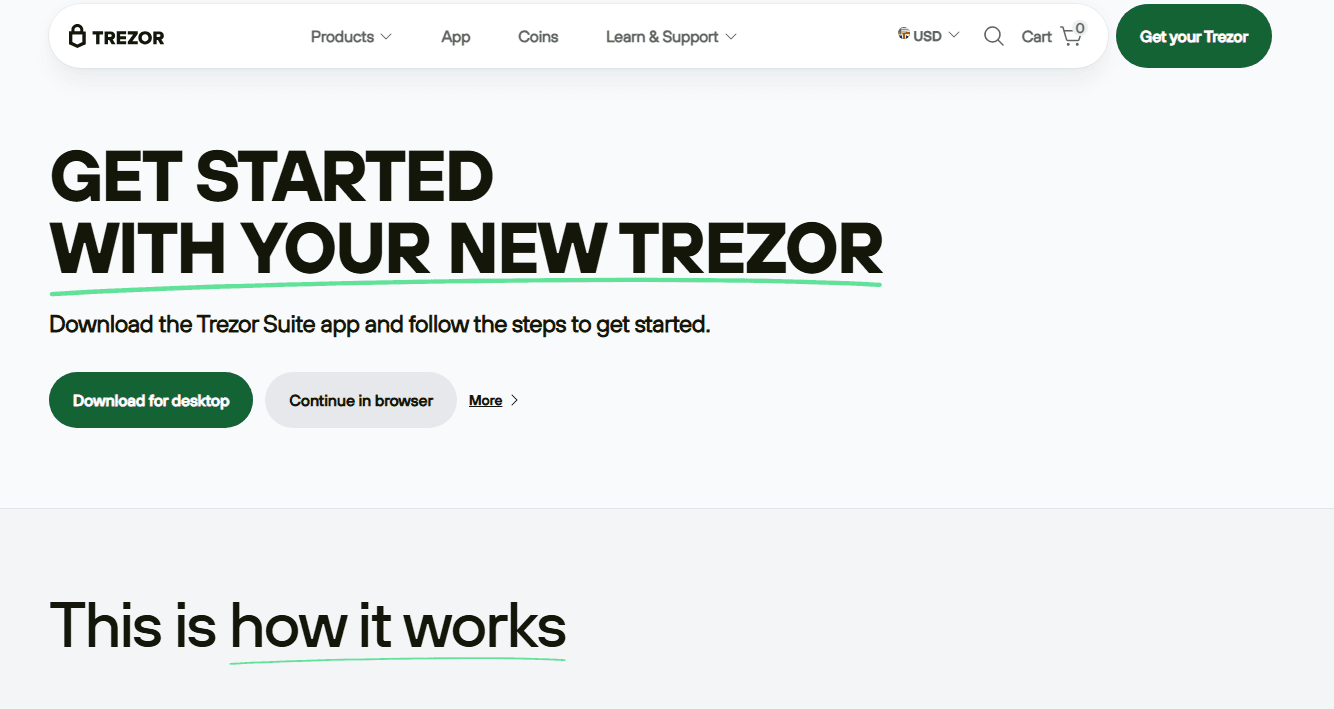
Introduction to Trezor Login
Trezor Login refers to the secure method of accessing cryptocurrency wallets through a Trezor hardware wallet. In contrast to traditional login systems that rely on usernames, passwords, or centralized servers, Trezor Login uses hardware-based authentication. This approach ensures that users remain in full control of their digital assets while significantly reducing exposure to online threats.
In the cryptocurrency ecosystem, security is directly tied to ownership. Whoever controls the private keys controls the funds. Trezor Login is built around this principle, giving users exclusive access to their assets through physical device verification rather than vulnerable online credentials.
How Trezor Login Works
Trezor Login does not function like a conventional account login. There is no account registration, no stored password, and no central database holding user information. Instead, access is granted only when the Trezor hardware wallet is connected and unlocked.
Authentication occurs through cryptographic verification performed entirely inside the device. The private keys never leave the hardware wallet, ensuring that sensitive data remains protected even if the connected computer is compromised by malware or spyware.
The Importance of Hardware-Based Authentication
Software wallets and browser-based logins expose private keys to internet-connected environments, increasing the risk of hacking and phishing attacks. Trezor Login eliminates these risks by storing private keys in an offline, secure element within the hardware wallet.
Because authentication requires physical interaction with the device, remote attackers cannot gain access without possession of the wallet itself. This hardware-first design is one of the strongest defenses available in cryptocurrency security.
PIN Code Protection
Every Trezor Login session begins with entering a PIN code. The PIN protects the wallet from unauthorized physical access. Even if the device is lost or stolen, the assets remain inaccessible without the correct PIN.
The PIN entry process is designed to resist keylogging and screen recording attacks. Each incorrect attempt increases the delay before another attempt is allowed, making brute-force attacks highly impractical. This layered protection adds an important safeguard to the login process.
Recovery Seed and Wallet Access
The recovery seed is a vital component of Trezor Login security. It is generated during the initial device setup and serves as the ultimate backup. If the hardware wallet is lost, damaged, or replaced, the recovery seed allows users to restore access to their funds.
Trezor Login depends entirely on the confidentiality of this recovery seed. Anyone with access to it can recreate the wallet and control the assets. For this reason, the recovery seed should be written down, stored offline, and protected from unauthorized access. It should never be stored digitally or shared.
Using Trezor Login with Trezor Suite
Trezor Login is commonly performed through Trezor Suite, the official interface for managing cryptocurrency accounts. Trezor Suite provides a clean and intuitive dashboard for viewing balances, organizing accounts, and reviewing transaction history.
During login, users connect the Trezor device, unlock it with the PIN, and confirm access. While the software displays information and requests actions, all sensitive approvals are handled directly on the hardware device. This separation ensures maximum security.
Transaction Verification During Login Sessions
Security extends beyond login. During any active session, transactions must be verified on the Trezor device itself. When sending cryptocurrency, important details such as the destination address and amount are displayed on the device screen.
Users must physically confirm the transaction, ensuring that no unauthorized or altered transactions can occur. This step protects users from malware that may attempt to manipulate transaction details on the computer.
Privacy and Decentralization Benefits
Trezor Login supports privacy by removing the need for personal information. There is no email address, username, or centralized identity required to access funds. Authentication relies entirely on cryptographic proof stored within the device.
This decentralized approach reduces the risk of data breaches and identity theft. Users retain full anonymity while maintaining complete control over their cryptocurrency holdings.
Common Login Issues and How to Avoid Them
Some users encounter login issues due to forgotten PINs, misplaced recovery seeds, or attempts to use untrusted devices. These issues can usually be avoided by following recommended security practices.
Keeping recovery seed backups secure, double-checking PIN entries, and using trusted computers help ensure smooth login sessions. Staying cautious and attentive during every login interaction is key to long-term asset protection.
Firmware Updates and Login Security
Firmware updates play an essential role in maintaining the security and reliability of Trezor Login. Updates often include protection against newly discovered vulnerabilities and improvements to overall performance.
The update process requires direct confirmation on the device, ensuring that only authentic firmware is installed. Keeping firmware up to date ensures continued compatibility and strong security for login sessions.
Who Should Use Trezor Login
Trezor Login is suitable for all types of cryptocurrency users. Beginners benefit from the simple yet secure authentication process, while experienced users appreciate the advanced protection and flexibility.
Long-term investors, frequent traders, and privacy-focused individuals all benefit from hardware-based login. By eliminating reliance on centralized platforms, Trezor Login gives users confidence that their assets remain fully under their control.
Best Practices for Secure Trezor Login
To maintain maximum security, users should follow these best practices:
Store the recovery seed offline in a secure location
Use a strong and memorable PIN
Verify all on-device prompts carefully
Keep firmware updated regularly
Avoid logging in on public or untrusted computers
Consistently following these practices greatly reduces the risk of unauthorized access or asset loss.
Conclusion
Trezor Login offers a secure, private, and reliable way to access cryptocurrency wallets. By replacing traditional passwords with hardware-based authentication, it eliminates many vulnerabilities associated with online accounts and centralized systems.
Through PIN protection, recovery seed backups, physical transaction verification, and decentralized authentication, Trezor Login ensures that users remain in full control of their digital assets at all times.
For anyone serious about cryptocurrency security and long-term asset protection, Trezor Login provides a trusted and user-controlled solution for managing digital wealth safely and confidently.